The yarn a beanie is knitted from decides almost everything a wearer notices: how warm it is, whether it itches, how it handles a sweaty walk or a cold bus stop, how long it holds its shape, and what it costs per unit. Style and decoration get most of the attention when people order custom knit hats, but the fiber is the quieter decision that determines whether the finished beanie gets worn all winter or shoved in a drawer. This is a look at what each common yarn actually does, so the choice matches the way the hat will be used.
What actually makes a beanie warm
Warmth comes from trapped air as much as from the fiber itself. A knit hat insulates by holding a layer of still air against the head, so loft and construction matter alongside the raw material. A chunky, low-gauge knit traps more air and feels warmer than a thin, fine-gauge knit of the same yarn, which is why a lightweight fiber knitted densely can outperform a heavier one knitted loosely. A fleece lining or a doubled cuff adds a second still-air layer and blocks wind, and it can make an otherwise middling fiber genuinely warm. Keep that in mind as the fibers come up below: the yarn sets the ceiling, but the knit and the lining decide how much of that ceiling you reach.
Acrylic: the default for bulk and branding
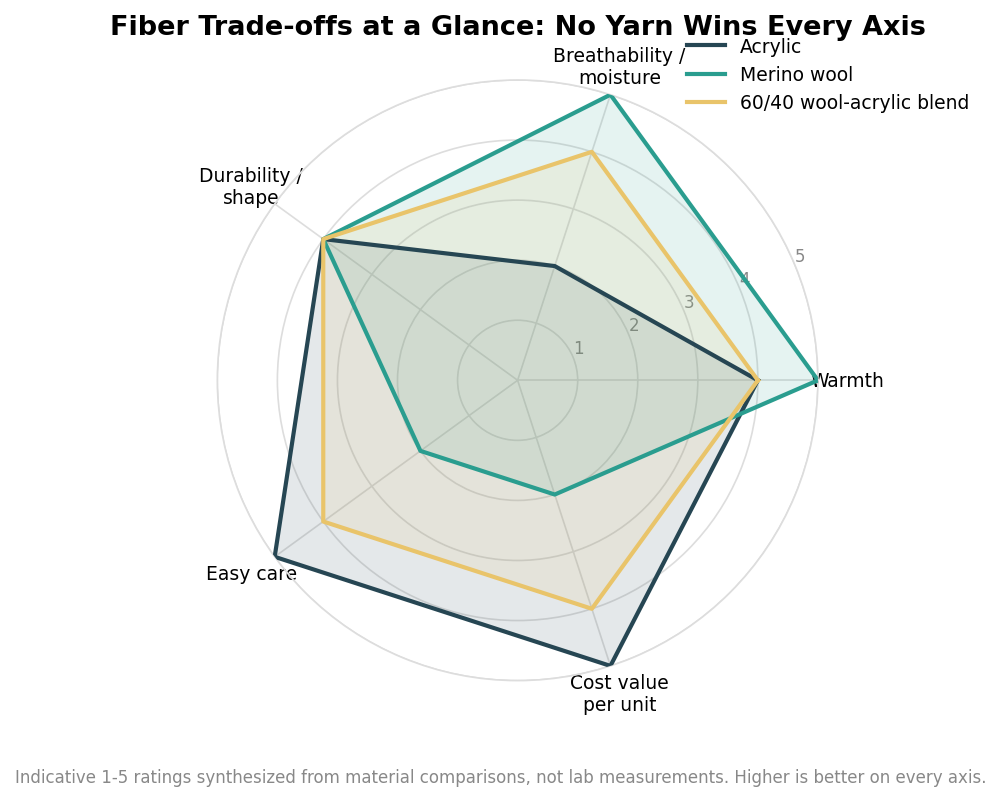
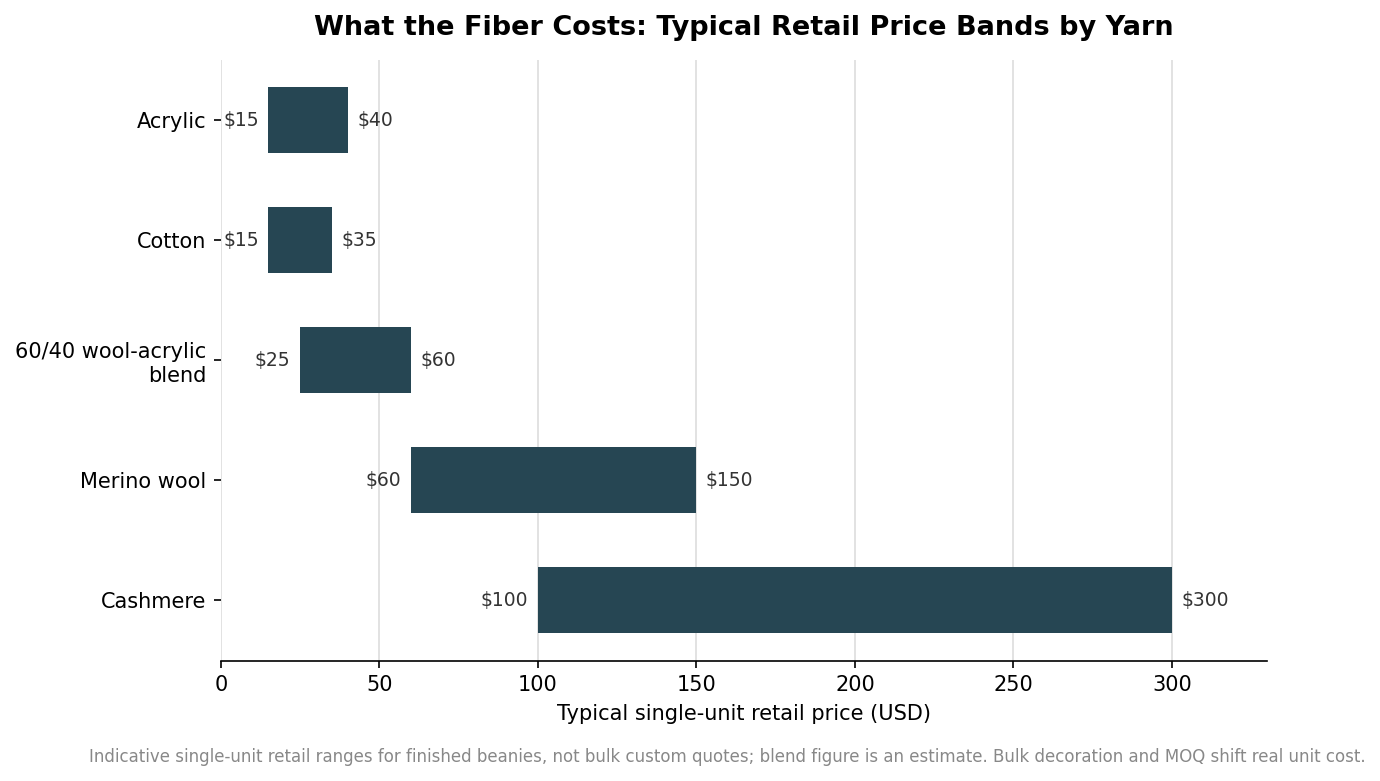
Acrylic dominates custom and promotional beanies because it does the practical things well and cheaply. It insulates by forming air pockets, holds its shape over years of wear, comes in effectively any color for tight brand matching, and is machine washable and tumble-dry friendly, which matters when the hat is a giveaway rather than a treasured possession. It is also hypoallergenic and resists pilling better than many natural fibers. Typical finished acrylic beanies sit at the low end of the price scale, which is what makes large runs viable. The honest limitation is breathability: acrylic can trap moisture during hard activity, so a wearer who works up a sweat may feel clammy in a way they would not in wool. For everyday cold weather, tailgates, event handouts, and retail merch that has to hit a price, acrylic is usually the right default rather than a compromise.
Merino and wool blends: when comfort and moisture matter
Merino wool is the upgrade for hats worn against the skin during real activity. Its advantages are specific and measurable in feel: it is exceptionally breathable, it wicks moisture and can absorb up to around 30 percent of its weight in water before it feels wet, and it is naturally odor-resistant enough to wear repeatedly between washes. The itch that people associate with old wool is a function of fiber diameter, measured in microns; fine merino, generally around 18.5 microns and below, feels soft against the forehead where coarser wool over about 25 microns scratches. The trade-offs are care and cost: merino wants gentle, cool washing and flat drying, and it sits several times higher than acrylic on price.
For most buyers the sweet spot is a blend. A common 60 percent acrylic, 40 percent wool construction keeps much of wool’s warmth and hand while adding acrylic’s easier care, better shape retention, and lower cost. A blend is the practical answer when you want the beanie to feel better than pure acrylic without the price and delicacy of full merino, which is why blends cover a lot of mid-tier headwear.
Cotton, fleece linings, and recycled options
Some fibers earn a place for reasons other than peak warmth. Cotton knits are breathable and easy to care for, and they suit spring, fall, and mild-climate hats, but cotton is only a fair insulator and it loses warmth when wet and dries slowly, so it is a poor choice for deep winter or anything worn in the rain. Fleece linings, usually polyester, are a construction choice rather than a fiber choice, and they are one of the most effective ways to add warmth and wind resistance to a beanie in any outer yarn, at the cost of a little breathability. Recycled polyester yarns and recycled-content blends have become a real option for buyers who want a sustainability story on the hangtag; they perform much like their virgin equivalents while letting a brand speak to recycled content. Cashmere sits at the luxury extreme, lightweight and warm but prone to pilling, quick to lose shape, and demanding hand-wash care, which usually rules it out for anything but small premium runs.
How the yarn changes decoration and care
The fiber and the knit gauge quietly constrain how a logo should be applied. Fine-gauge knits give embroidery a stable, dense surface that holds crisp stitches, while chunky, low-gauge knits have gaps between loops that can swallow small text and distort fine detail, so bold, simple marks read better on them. A woven label or a patch is often the smarter route on very soft or delicate fibers like fine merino and cashmere, where dense embroidery can pull and pucker the knit. Color matters too: acrylic accepts a huge palette for exact brand matching, whereas natural fibers have a more limited, more muted range.
Care instructions should follow the yarn onto the label, because a premium beanie ruined in a hot wash is a wasted spend. Acrylic and most blends tolerate machine washing and low tumble drying; merino, wool, and cashmere want cool, gentle washing and flat drying to keep their shape. Decide the use first, let it choose the fiber and the knit gauge, then match the decoration and the care label to what the yarn can actually take. Done in that order, the beanie is warm enough, comfortable enough, and durable enough for the way it will really be worn, which is the whole point of ordering a custom one.